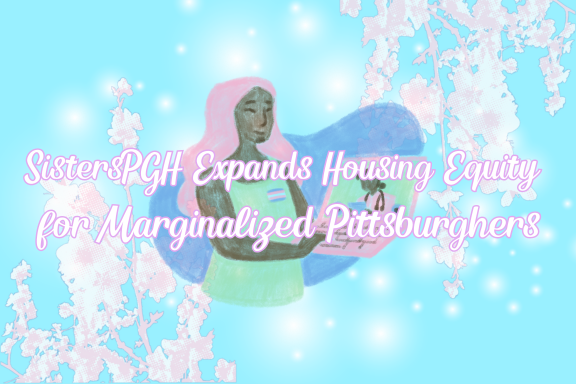
SistersPGH Expands Housing Equity for Marginalized Pittsburghers
Written by Arlo Grey MacFarland
In a time when housing insecurity is becoming more and more dire, especially for marginalized communities, it is vital that we collectively step up and support. The organization SistersPGH is actively working towards dismantling “systemic oppression of BIPOC (black, indigenous, people of color) transgender and nonbinary communities” in Allegheny county.
SistersPGH was founded in 2013 by Ciora Thomas (she/they). Her bio on the website states, “Ciora founded the nonprofit in 2013 because of her own struggles as a teenage homeless sex worker surviving within a cis-tem that feeds off of trans youth homelessness, drug addiction, and transphobia. She saw no real opportunities for herself or others to thrive independently as a Black trans adolescent.”
SistersPGH advocates for social justice regarding the Pittsburgh trans community, valuing community empowerment, gender-affirming healthcare, housing equity, and economic justice. BIPOC and transgender communities have been historically at a disadvantage with seeking housing and healthcare, and this organization seeks to change that. Through providing housing, employment resources, gender affirming care, and more, through their various outreach projects in the greater Pittsburgh area. The following detail some of their major projects.
The Stonewall Inn is a drop-in space located downtown providing gender affirming care, housing and employment aid, workshops and community outreach, and behavioral health and therapy services, all for free. The SistersPGH website states, “By situating our services in the heart of the city, we are making a powerful statement about the visibility and importance of transgender lives. Stonewall Inn provides a critical resource hub, fostering a sense of belonging and safety for transgender individuals who often feel marginalized and isolated.”
Monica Roberts Place is a housing program for BIPOC trans people in Allegheny county. Through financial empowerment and homeowner initiatives, the project aims to provide long-term housing solutions when many others are providing short-term options. Monica Roberts Place offers affordable, one-bedroom apartments specifically designed to accommodate trans people of color. Aimed for BIPOD trans communities, but they also offer services to trans people living with HIV, and trans people experiencing housing insecurity.
Project T is Pittsburgh’s upcoming trans-led transitional housing project aimed at helping trans people in unstable housing situations. They provide affordable housing in the area alongside workshops in cooking, budgeting, and self care. By building a foundation for BIPOC trans people to thrive, they are actively working towards the demarginalization of these communities.
The Name Change Project supports local trans people in accomplishing legal name changes. Oftentimes, trans people change their names to something that feels more fitting to them, and when legal documents don’t reflect this, it can be difficult to navigate the world as you truly are. This project speaks with local governments about policies and injustices impacting the local trans community, as well as providing guidance and resources for those going through the name change process.
The Housing Equity Committee is the next step of Project T. They help transition members of Project T into more permanent housing solutions and an independent lifestyle. They aim to create growth and stability for BIPOC trans people, and take down the narrative that homeowning is a privilege. This project, like Project T, is still in the works, but both will have a great impact on our local communities.
It is clear that SistersPGH is hard at work advocating for the local BIPOC transgender community, with their various established and upcoming projects. As of now, they are also currently working on expanding their outreach programs into the Philadelphia region, continuing their activism across Pennsylvania. If you’re interested in learning more, donating, or volunteering, please visit sisterspgh.org.